

Aim for optimal seizure control for your LGS patients, with dosing up to 20 mg/kg/day1
In clinical trials, the 20-mg/kg/day dosage resulted in somewhat greater reductions in seizure rates than the 10‑mg/kg/day dosage, but with an increase in adverse reactions.
LGS Efficacy
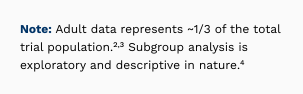
EPIDIOLEX was studied in 2 randomized, double-blind, placebo-controlled trials in patients living with LGS aged 2 to 55 years. 32% of patients were adults, ages 18-55, across both studies.2,3
Full study population
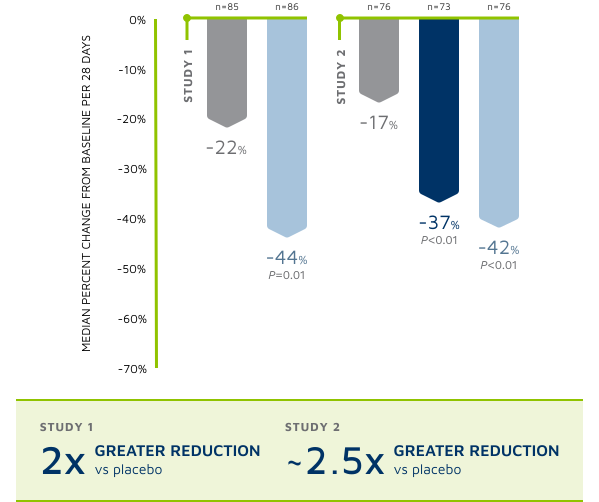
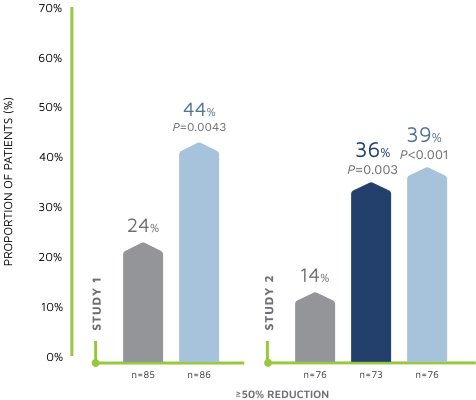
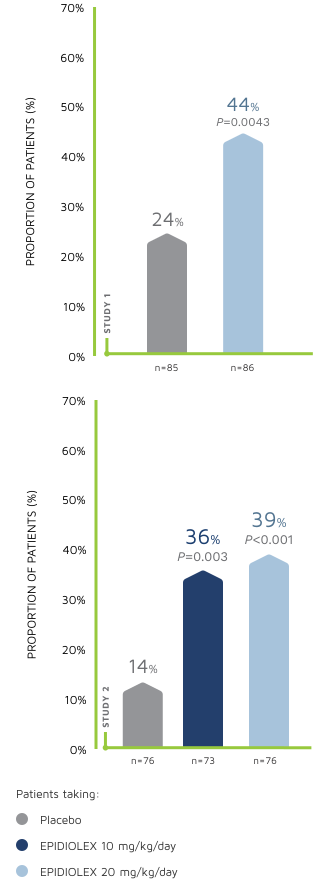
EPIDIOLEX significantly reduced drop seizure frequency in patients living with LGS
Subgroup: Adult patients
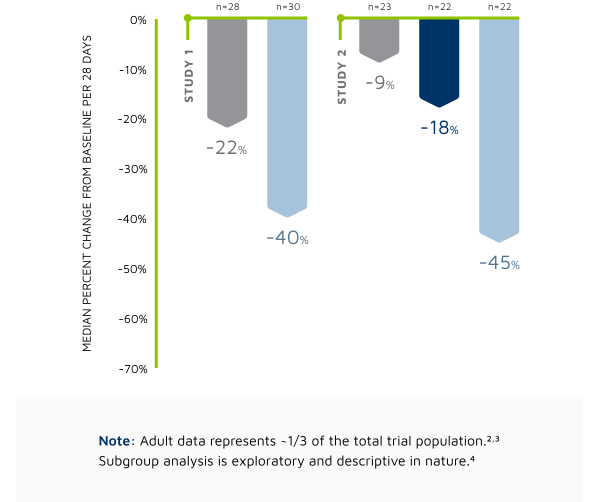
Prespecified exploratory subgroup analysis: Drop seizure reduction in adult patients
Drop seizure reduction in adult patients4
Full study population
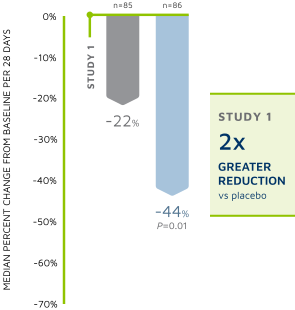
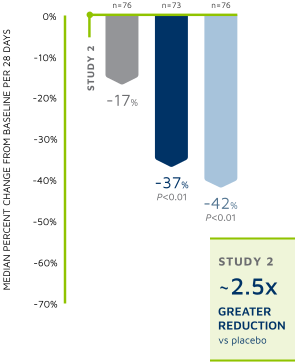
EPIDIOLEX significantly reduced drop seizure frequency in patients living with LGS

Subgroup: Adult patients
Prespecified exploratory subgroup analysis: Drop seizure reduction in adult patients
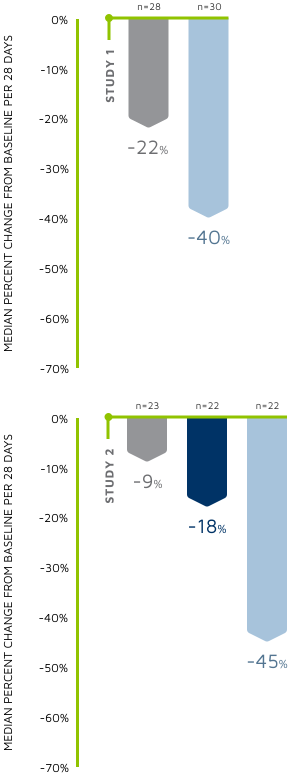
Results from the 14-week treatment period. Drop seizures were defined as atonic, tonic, or tonic-clonic seizures that led to or could have led to a fall or injury.2
Study 1 (N=171) compared a 20 mg/kg/day dose of EPIDIOLEX with placebo. Study 2 (N=225) compared a 10 mg/kg/day dose and a 20 mg/kg/day dose of EPIDIOLEX with placebo. In both studies, 94% of patients were inadequately controlled on ≥2 ASMs.
Full study population
EPIDIOLEX significantly reduced drop seizure frequency in patients living with LGS
Subgroup: Adult patients
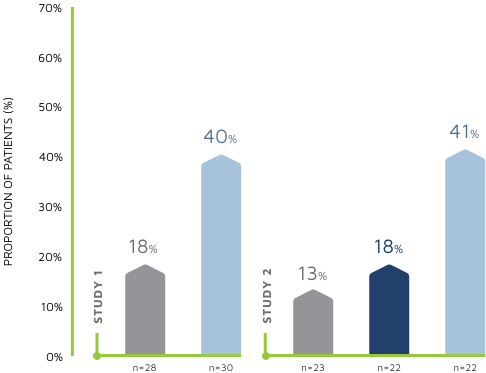
Prespecified exploratory subgroup analysis: Drop seizure reduction in adult patients
≥50% reduction in drop frequency from baseline among adult patients4

Full study population
EPIDIOLEX significantly reduced drop seizure frequency in patients living with LGS
Subgroup: Adult patients
Prespecified exploratory subgroup analysis: Drop seizure reduction in adult patients
≥50% reduction in drop frequency from baseline among adult patients4
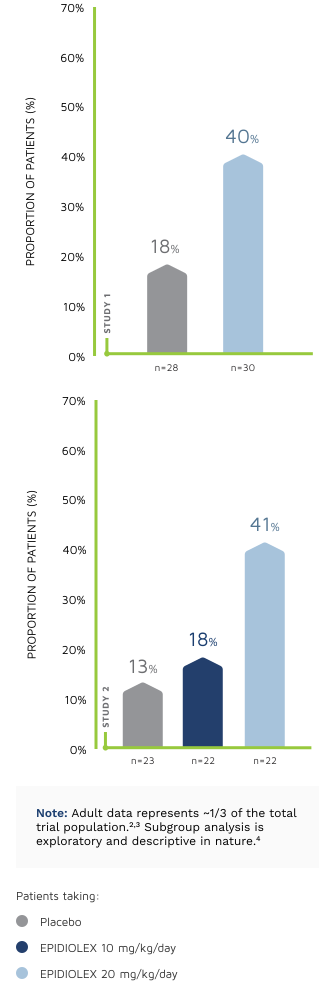
Results from the 14-week treatment period. Drop seizures were defined as atonic, tonic, or tonic-clonic seizures that led to or could have led to a fall or injury.2
Study 1 (N=171) compared a 20 mg/kg/day dose of EPIDIOLEX with placebo. Study 2 (N=225) compared a 10 mg/kg/day dose and a 20 mg/kg/day dose of EPIDIOLEX with placebo. In both studies, 94% of patients were inadequately controlled on ≥2 ASMs.
Titration
Flexible titration can help you determine the optimal dosage for your LGS patients, so you can balance seizure control with tolerability and ensure your patients receive an adequate trial

The starting dose is 5 mg/kg/day (2.5 mg/twice daily). Increase the dose weekly by 5 mg/kg/day (2.5 mg/kg twice daily) as tolerated to a recommended maintenance dosage range of 10 to 20 mg/kg/day (5 to 10 mg/kg twice daily).2

Administration of the 20 mg/kg/day dosage resulted in somewhat greater reductions in seizure rates than the recommended dosage of 10 mg/kg/day, but with an increase in adverse reactions.2
Dosing & titration from Consensus Panel
The Consensus Recommendations were developed by a panel of epilepsy experts to address knowledge gaps in EPIDIOLEX use.
The Consensus Recommendation Panel was sponsored by Jazz Pharmaceuticals.
Recommendations from your peers1:

Determine the initial target dose and titration rate based on patient baseline variables, prior response to ASMs, and mutually agreed-upon therapeutic goals.

The titration rate should be based on your clinical judgment.
EPIDIOLEX can be initiated low (2.5 mg/kg twice daily) and titrated slowly, which may mitigate AEs.

EPIDIOLEX should be taken consistently with or without food and can be taken while on dietary therapies such as the ketogenic diet. Some epilepsy experts suggest taking EPIDIOLEX with food to potentially increase absorption and bioavailability.

Achieve a minimum dose of 10 mg/kg/day and optimize up to 20 mg/kg/day as needed over 3 months based on response.

Inform patients that the response to EPIDIOLEX is individualized.
Once the target maintenance dose is achieved, evaluate response over 3 to 4 months.

Every patient should be encouraged not to discontinue EPIDIOLEX due to lack of efficacy until the drug has had an adequate trial at the maximum tolerated dose.
Use our dosing & titration calculator
Calculate your patient’s doseSafety profile of EPIDIOLEX
The safety profile for EPIDIOLEX was evaluated in an expansive clinical trial program3,5
MOST COMMON ADVERSE EVENTS (≥10% AND GREATER THAN PLACEBO) OBSERVED DURING THE 14-WEEK TREATMENT PERIOD OF THE PHASE 3 CONTROLLED TRIALS FOR LGS AND DRAVET SYNDROME (%)
| Placebo (n=227) | EPIDIOLEX 10 mg/kg/day (n=75) | EPIDIOLEX 20 mg/kg/day (n=238) | |
|---|---|---|---|
| Hepatic Disorders Transaminases elevated | 3 | 8 | 16 |
| Gastrointestinal Disorders Decreased appetite Diarrhea | 5 9 | 16 9 | 22 20 |
| Nervous System Disorders Somnolence Fatigue, malaise, asthenia Insomnia, sleep disorder, poor-quality sleep | 8 4 4 | 23 11 11 | 25 12 5 |
| Infections Infection, all | 31 | 41 | 40 |
| Other Rash | 3 | 7 | 13 |
- EPIDIOLEX was found to have a consistent safety profile in children and adults
- Hematologic abnormalities, decreased weight, and increased creatinine levels were also observed
- In the LGS and Dravet syndrome studies, the rate of discontinuation for any adverse reaction was 2.7% for patients taking EPIDIOLEX 10 mg/kg/day, 11.8% for patients taking EPIDIOLEX 20 mg/kg/day, and 1.3% for patients on placebo
- The most frequent causes of discontinuation were transaminase elevations, somnolence, sedation, and lethargy in the LGS and Dravet syndrome studies
- Pneumonia was observed more frequently with concomitant use of EPIDIOLEX and clobazam
Adverse events, management, and recommendations from your peers:
Hepatic impairment:
- Dose adjustments and slower dose titration are recommended in patients with moderate or severe hepatic impairment*
- Dose adjustments are not required in patients with mild hepatic impairment*
- Consider not initiating EPIDIOLEX in patients with evidence of significant liver injury*
For specific dosing adjustments for individuals with moderate to severe hepatic impairment, see the EPIDIOLEX Prescribing Information.
Diarrhea:
- Diarrhea may be experienced by patients taking EPIDIOLEX*
- In the LGS and Dravet syndrome clinical trials, the rate of diarrhea incidence was*:
- 9% for patients taking 10 mg/kg/day
- 20% for patients taking 20 mg/kg/day
- A consensus panel of experts said approaches to mitigating diarrhea have included modifying bowel regimens and slowing dose titration1
Somnolence and sedation:
- Somnolence and sedation may be experienced by patients taking EPIDIOLEX*
- A consensus panel of experts said somnolence and sedation are more common early on in treatment, and most cases resolve within a few weeks without any dose adjustment needed1
- Consider a reduction in dosage of concomitant clobazam if adverse reactions are experienced1
*Based on information contained in the Prescribing Information.
AE=adverse event; ASM=antiseizure medication; LGS=Lennox-Gastaut syndrome.
References: 1. Wechsler RT, Burdette DE, Gidal BE, et al. Epilepsia Open. 2024;9(5):1632‑1642. 2. Thiele EA, Marsh ED, French JA, et al. Lancet. 2018;391(10125):1085‑1096. 3. Devinsky O, Patel AD, Cross JG, et al. N Engl J Med. 2018;378(20):1888‑1897. 4. Data on file. Jazz Pharmaceuticals, Inc. 5. Devinsky O, Cross JH, Laux L, et al; Cannabidiol in Dravet Syndrome Study Group. N Engl J Med. 2017;376(21):2011‑2020.